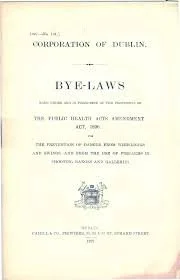
The Building Bye-Laws in Ireland can be difficult to establish, as they were generally applied in certain circumstances and locations, depending on where you were living in Ireland.
As a general rule of thumb, Bye-Laws only applied in areas that had an “Urban District Council” (UDC), as they were seen as being areas for strategic building and required a construction standard.
In Galway and Mayo, UDC areas were: Galway City, Ballinasloe, Ballina, Castlebar and Westport. The Building Bye-Laws were subsequently replaced by the Building Regulations after 1/6/1992 and then enforced nationwide as statutory Building Regulations. The Building Regulations are written as Technical Guidance Documents and are now regularly updated.
How was a Building Bye-Law application made?
Before 1/6/1992, in a UDC area, you had to make an application for Building Bye-Law approval for any development being proposed directly to the UDC. When planning laws were enacted under the Local Government (Planning & Development) Act 1963 (commencing on the 1/10/1964), Bye-Law approval was generally made as part of a planning application. Before the 1/10/1964, there was an independent application process, where an approval was sought directly with the UDC.
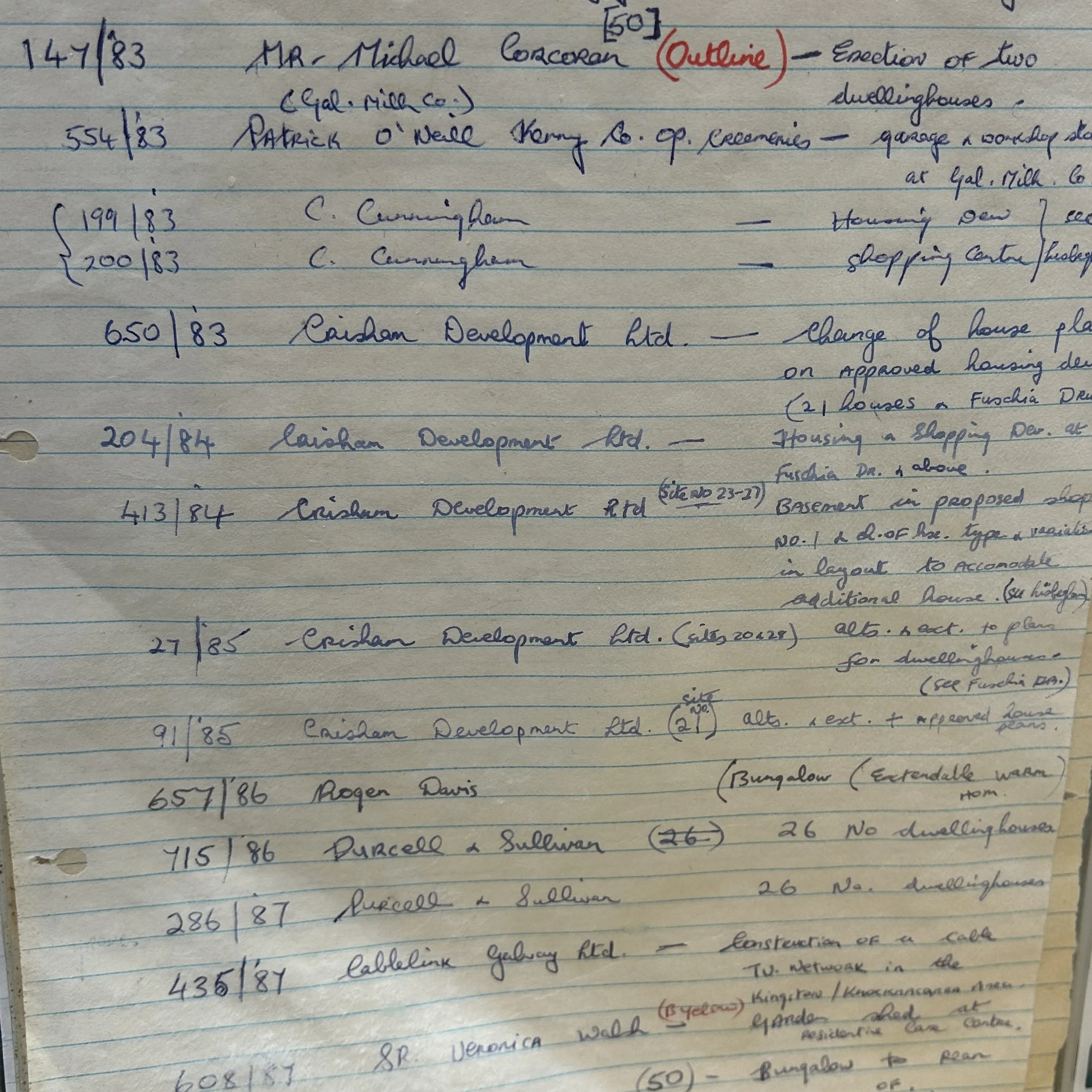
In Galway City, the register of Bye-Law approval is contained on the planning register. This is a hand-written register and has to be directly requested when at the planning counter, as it is not available online.
As part of a Bye-Law application or planning application, the Engineer or Architect submitted plans and a specification of work. These documents were evaluated by the County Engineer in the UDC and then approved or rejected.
I need to have a certificate of compliance with the Building Bye-Laws, am I in trouble?
Often times, the Bye-Law approval register is scant and few files are scanned or available from it. However, if you are selling your home and Bye-Law confirmation is required, it is not a problem because there was an “amnesty” given for all works built before the 13/12/1989 under section 22 (7) of the Building Control Act 1990.
So, works built before this date are deemed to be compliant with Building Bye-Laws in UDC areas, by default. Works after this date are obliged to comply with the Building Regulations 1992, which came into force on the 1/6/1992.
So, what are the actual Building Bye-Laws?
If you go searching for a book on the Building Bye-Law standards, you won’t find anything. The standards were locally enforced building standards, based on good practice, some British Standards and generally the common sense of the County Engineer in the UDC!
The only reference you may find to a standard is in the Bye-Law application documents. There generally is no book on what the standards are. This is why the building regulations were introduced, because they created a standardised set of rules and regulations to be followed, and are applied nationwide.
So, Bye-Law approval and confirmation of same is often considered as a technical formality these days, owing to the amnesty that was awarded under the Building Control Act 1990.
But my property was built between 13/12/1989 and 1/6/1992, what do I do?
This is a narrow window, but if your property was built between these dates in a UDC area then there must be either a Bye-Law application or planning application for your development and these files are usually available in the local planning office (where the UDC was merged).
If you are selling your house in an old UDC area in Galway or Mayo and there is a question on Bye-Law approval, give mypropertysurvey.ie a call and we can help to resolve any compliance issue you may have.