What is Radon and how does it impact my home in Galway or Mayo in 2027?
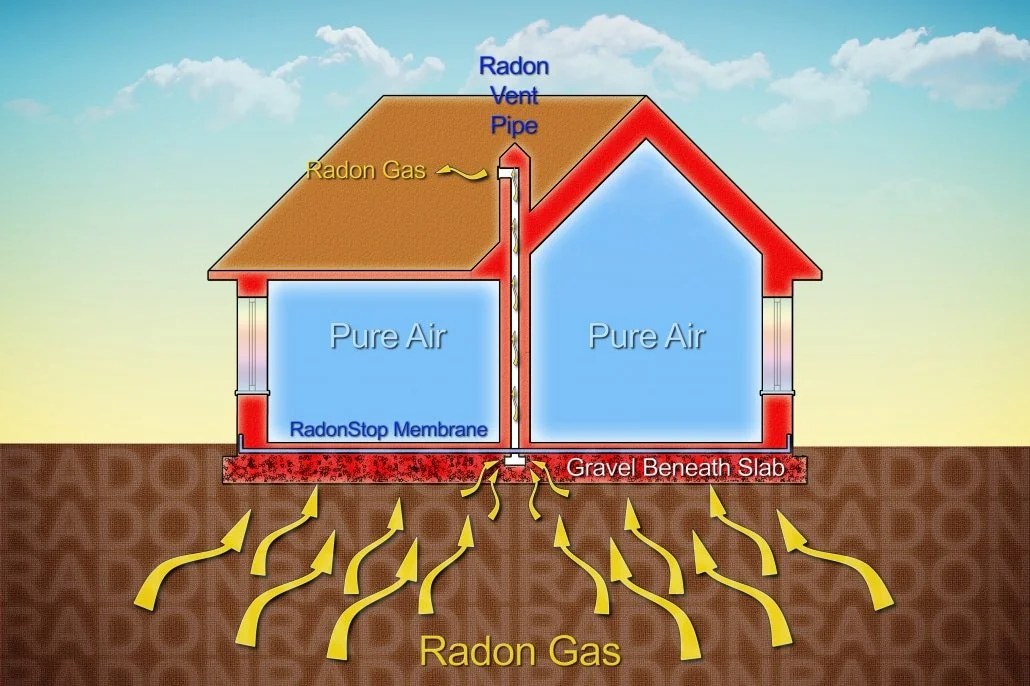
Image: How Radon Gas enters your home in Galway or Mayo
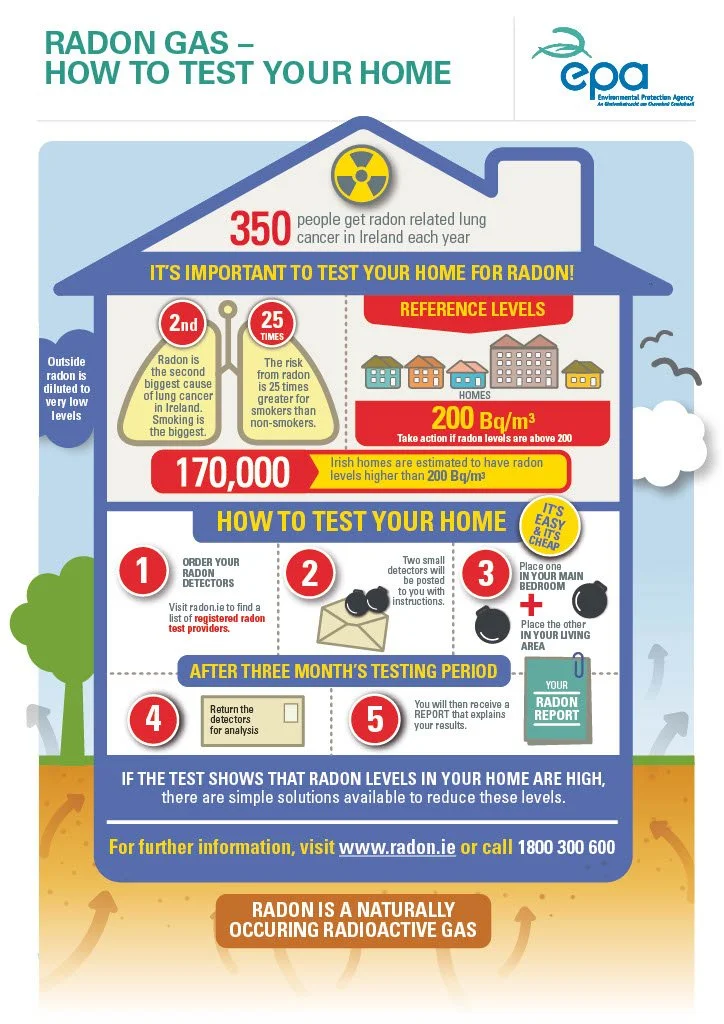
Radon is a gas that occurs naturally within the underground rock formations right across Ireland, including in Galway and Mayo. Radon has no smell, colour or taste but it is a biproduct of radioactive decay beneath your home. It is a proven cause of lung cancer in Ireland if present in high concentrations over a long period of time (given as 200 Bq/m³ by the Environmental Protection Agency).
Where are the high and low Radon areas in Galway?
By reviewing the Radon map for Galway below, you can see Oughterard, Moycullen and Kiltullagh are in areas of low Radon concentration whereas Headford, Oranmore and Barna are in areas of higher Radon concentration.
Where are the high and low Radon areas in Mayo?
From the Radon map for Mayo below, you can see Foxford, Kiltamagh and Crossmolina are in areas of low Radon concentration whereas Swinford, Balla and Ballyheane are in areas of higher Radon concentration.
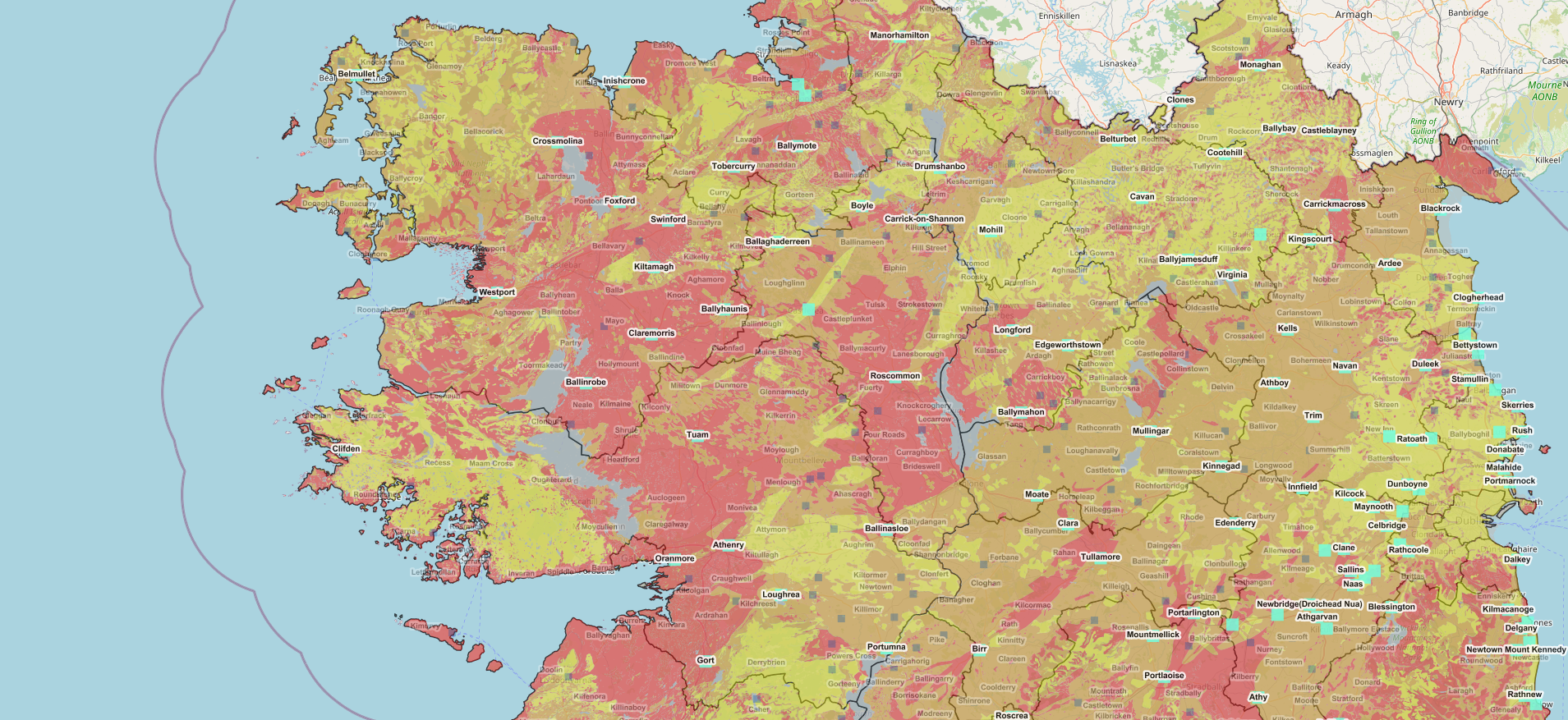
Image: Radon Map from EPA showing radon concentrations in Galway and Mayo in 2027
What steps can be taken to mitigate for Radon Gas?
There are steps you can take to prevent Radon impacting your health, as follows:
Carry out a radon test to identify if you actually have a Radon problem in the first place (most homes don’t have any issues).
You can take a course of action appropriate to the results obtained.
Do I need a specialist to carry out a Radon test on my property?
No, you can buy a do-it-yourself radon testing kit from any one of a number of reputable Irish companies who will send the kit to your address in Galway or Mayo by post. Testing is not difficult, a test kit usually contains two detectors – a detector is a plastic disc about the size of your hand – and you put one in your busiest room (kitchen or sitting room, for example) and the other in your main bedroom. After three months, return the two discs to the company you bought them off. They will analyze the detectors and post you back a report detailing your results. The result you will be hoping for is that the samples will be below 200Bq/m3.
What if my Radon results are above the safe level of 200 Bq/m³?
While this can be concerning, it can be fixed and you can take a course of action to remove Radon from your home. The simplest and most effective way to reduce Radon levels in your home is to increase indoor ventilation. Ensure the trickle vents in your window frames are open (if you have them), and/or install some wall vents. By simply increasing your indoor ventilation you can quickly half the concentration of Radon in your home.
What if the reduction does not reduce my Radon concentration below the safe level of 200 Bq/m³? You can still effectively treat the problem, but for this you will need to install an active Radon sump. This involves fitting something the size of a plastic bucket under your floor slab and a pipe with a small fan to the outside of your house (it will resemble a second soil vent stack on your gable wall).
And after that? Very little – repeat your test every three to five years to ensure the measures you take maintain their effectiveness but otherwise relax and get back to enjoying day-to-day life in your home.