The impact of Japanese knotweed in Galway & Mayo homes in 2027
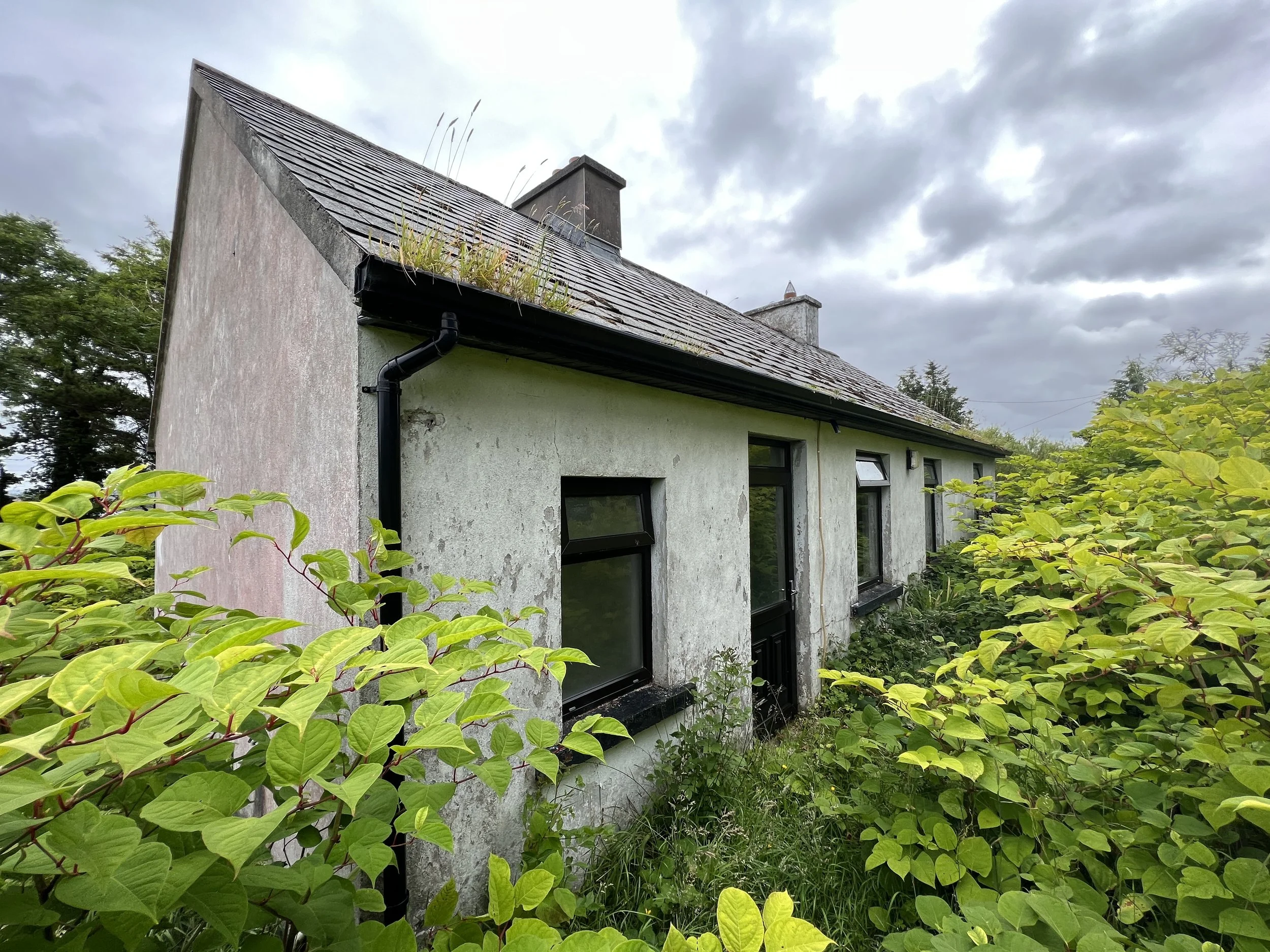
Japanese Knotweed in Connemara, Co. Galway, right beside a dwelling! This image was taken by staff from mypropertysurvey.ie
Japanese knotweed (Fallopia japonica) is a highly invasive plant species that is not native to Ireland. It was originally imported from East Asia during the Victorian era as an ornamental garden plant. It is widespread across every county including Galway & Mayo. It thrives in Ireland's mild, wet climate. From our surveys, we have noted it more in areas where it can grow without hindrance, in particular along abandoned railway lines and adjoining rivers and streams. However, we have also seen it along public roads in rural areas.
It can be identified through its red stem that has a ‘zigzag’ or left to right shape between leaves. Some variants have a white flower (in summer) but the leaf of the plant has an intense green colour, that often stands out and is one of the most striking things about the plant. The leaf is an almost heart shape, and is very recognisable, but it can also be mistaken for Bindweed, as it has a similar leaf shape. We have also seen variants such as Giant Knotweed and Himalayan Knotweed in our work.
(All images produced in this blog post were take by mypropertysurvey.ie from structural survey work undertaken in Mayo and Galway)
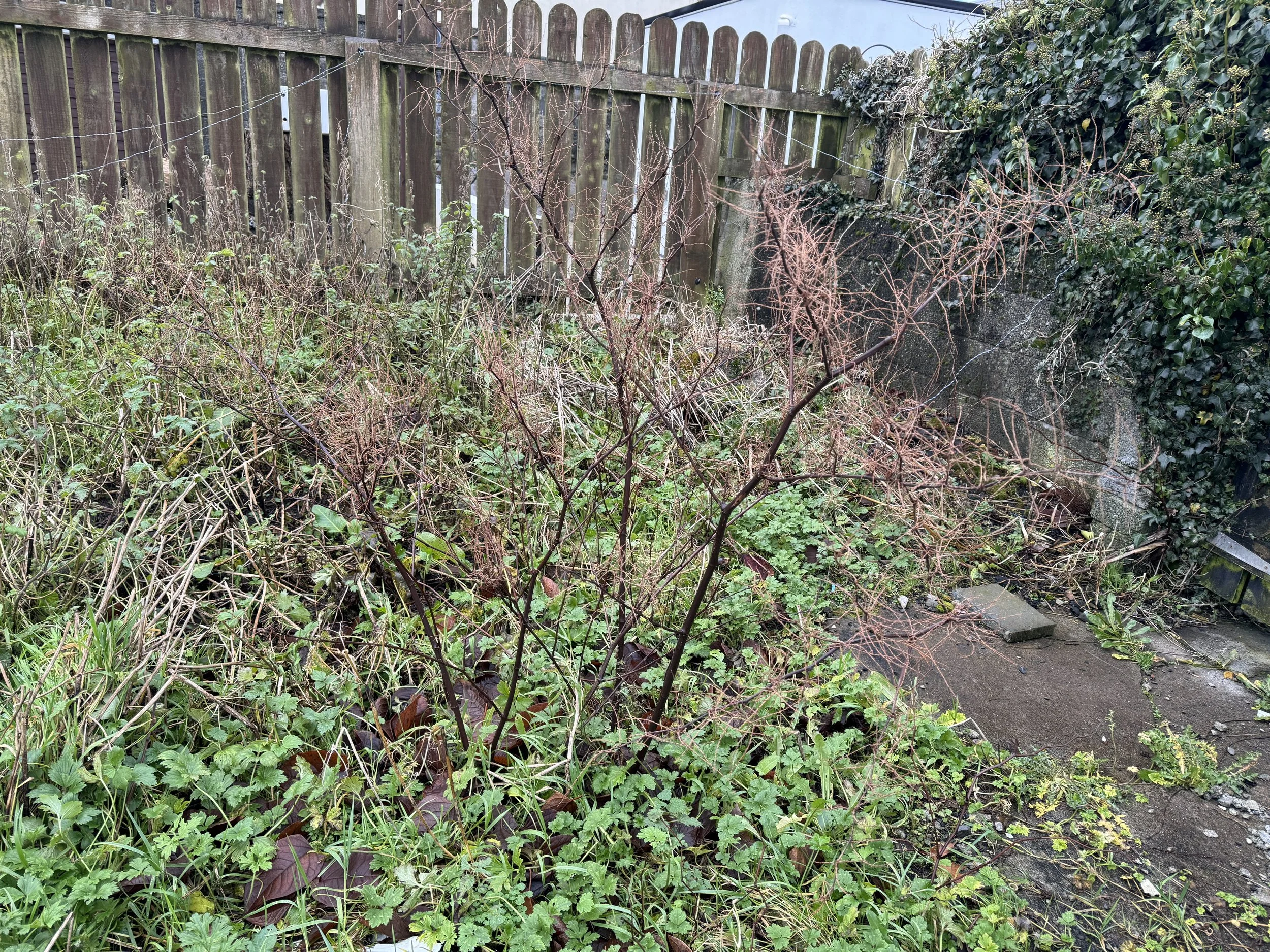
Knotweed found in winter in a property in Loughrea, Co. Galway. Note how much it is dying back!
What are the structural problems with Japanese Knotweed around buildings in Galway and Mayo?
From our experience to date, we have not seen any structural damage to houses from Knotweed infiltration. We have seen Knotweed plants growing right up beside the external wall of a house, but no structural damage was recorded. That’s not to say it does not happen, we have read reports on damage in other areas, but the plant itself can be lazy and tends to exploit existing weaknesses in structures, as opposed to creating one.
So, in older stone houses that are built on compacted earth, a knotweed infestation can be troublesome and infiltrate internally. In a concrete house, with concrete foundations, it is unlikely to be impacted by knotweed. However, that does not preclude infill areas in strip foundations that have organic matter to which the knotweed can easily take advantage of.
The root system of Knotweed can grow 2-3m deep and spread 5-7m from the centre of the plant. When we undertake a structural survey of a property, we tend to examine the immediate 2m around a house for signs of Knotweed, then we undertake a general overview of the surrounding areas, up to a further 5m. In general, some lenders have difficulty with knotweed being within 7m of a house, so this is why we inspect the immediate 7m.
It can be difficult to identify Knotweed in the winter months, as it tends to die back significantly and can be hard to spot.
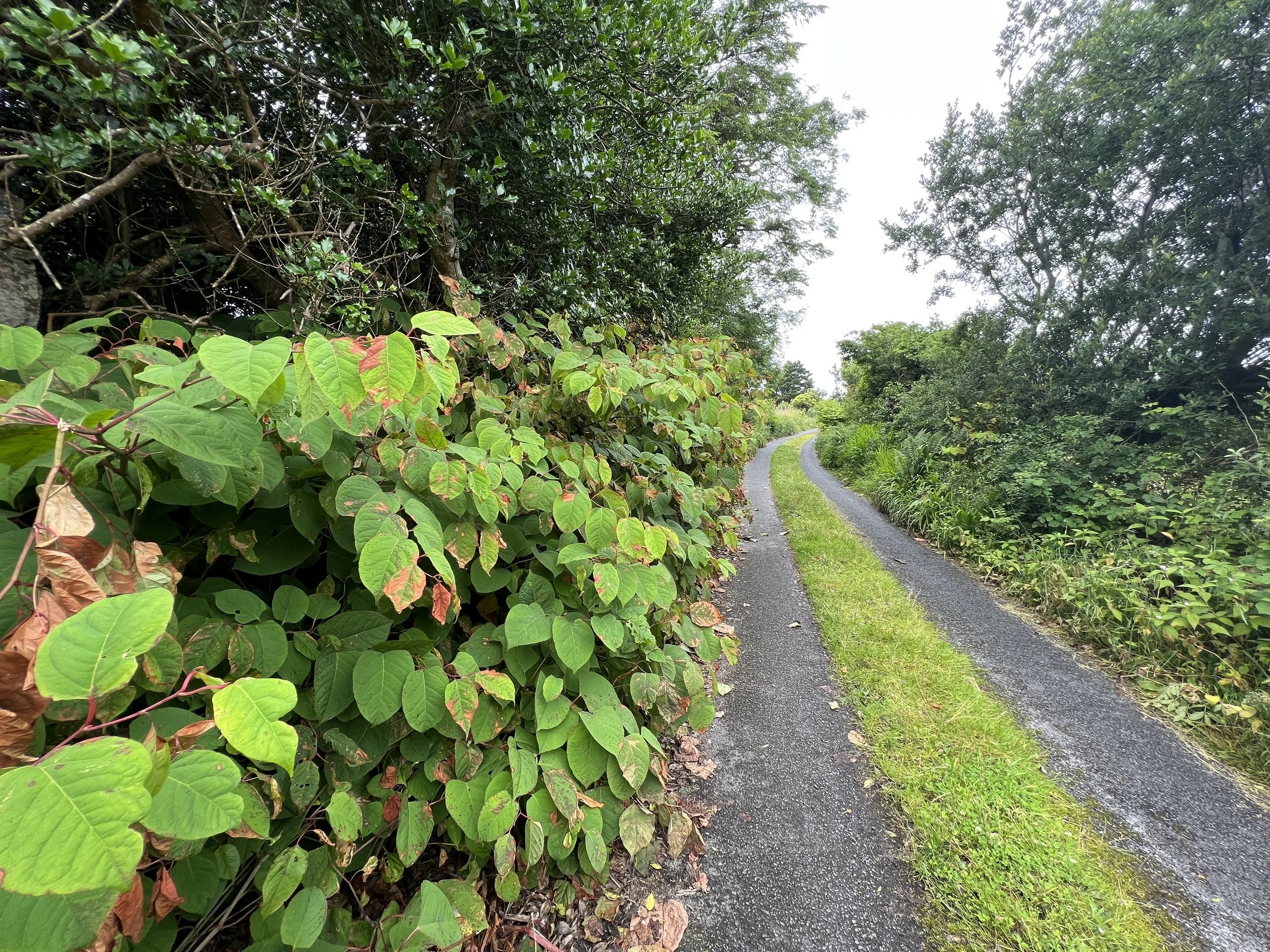
Japanese Knotweed along a public road. This should be notified to the local council or the NPWS.
Eradication of Japanese Knotweed in Galway and Mayo
From talking to local horticulturalists, eradication is best undertaken in September/October (when the plant is dying back) by injecting the root with herbicide. This process is slow and it is something that can take up to 3 to 5 years to complete. Other options are full excavation, but this is risky and may not always work.
The root system of Knotweed can grow 2-3m deep and spread 6-8m from the centre of the plant. The root system is a rhizome structure, which helps make the plant exceptionally resilient and difficult to eradicate. So, removal options are something that should be carefully considered and a strategy needs to be put in place. In particular, the use of herbicide beside streams and rivers needs careful consideration as it may cause environmental damage. Hence, such plans should be approved by the local council first.
If the Knotweed is discovered on Private land, you don’t have to notify the council about it, but you have to take steps to eradicate it. If it is growing beside a public road or in public property, then it must be notified to the Environment Section of Galway County Council or Mayo County Council and/or the National Parks and wildlife Service (NPWS).
It is an offence to transport Knotweed, and if you need to do so, then it requires a licence from the NPWS - Regulation 49 & 50 of the Birds and Natural Habitats Regulations 2011
One of the most important things to do is to not strim or cut knotweed, as it may unintentionally cause the plant to spread and this would make the infestation worse. Knotweed can grow from a 5mm cutting, so this just shows how invasive it can be.
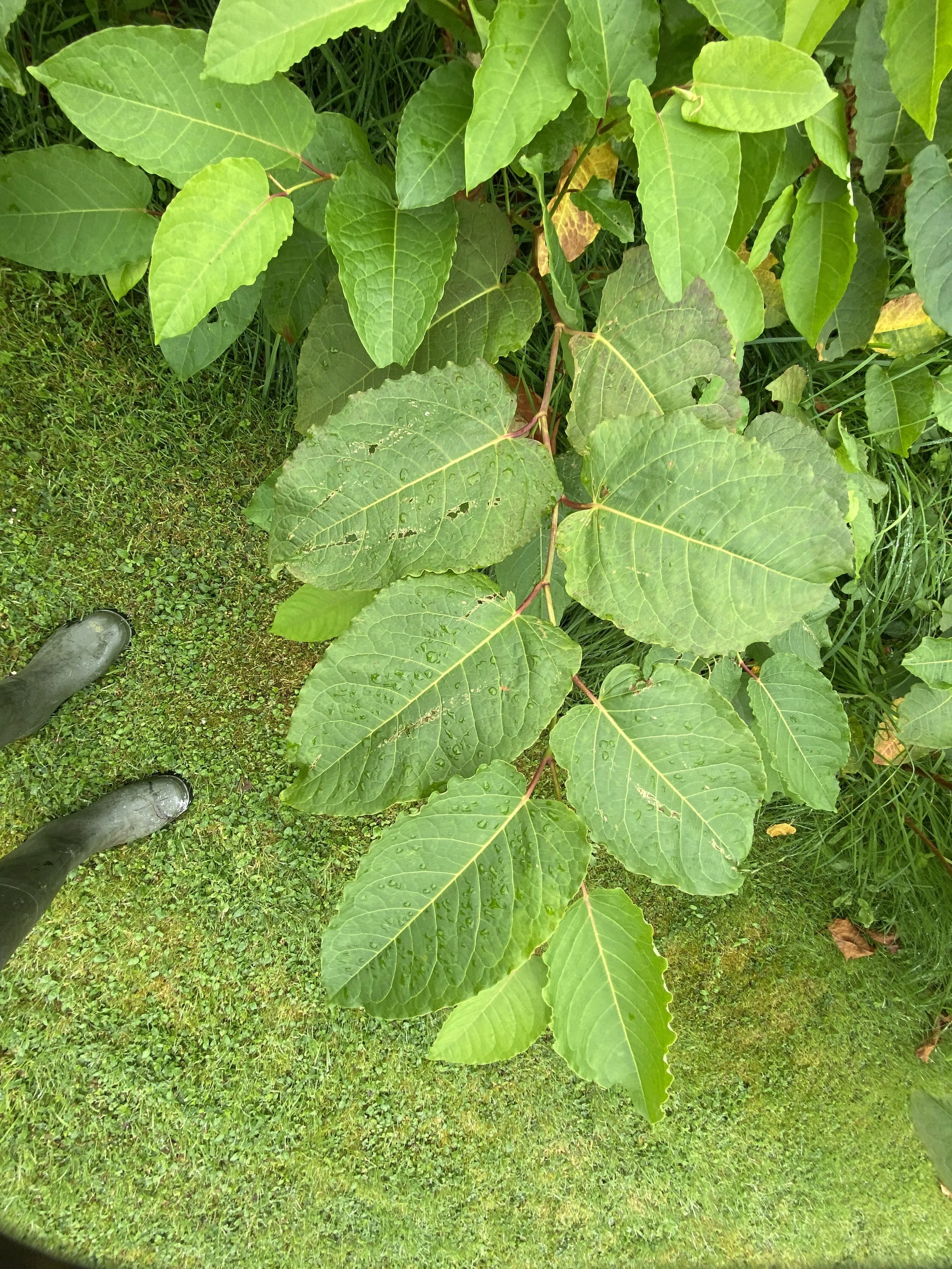
‘Giant’ Knotweed found in Galway, beside a lake.
I have found Japanese knotweed in my home in Galway/Mayo, what do I do?
Firstly, it’s not the end of the world! If knotweed is identified, then it is important to put a plan in place to eradicate it. This can be a medium to long term plan with herbicide or it can be a more immediate plan such as removal.
You can contact Galway County Council, Mayo County Council or the NPWS and seek advice on how to remove it or how to put an effective plan in place to remove it.
The key thing to remember is not to cut, mow or strim it, because you could make the problem much worse and, if fact, help it to spread further! Seek professional advice and put a plan in place to remove it.
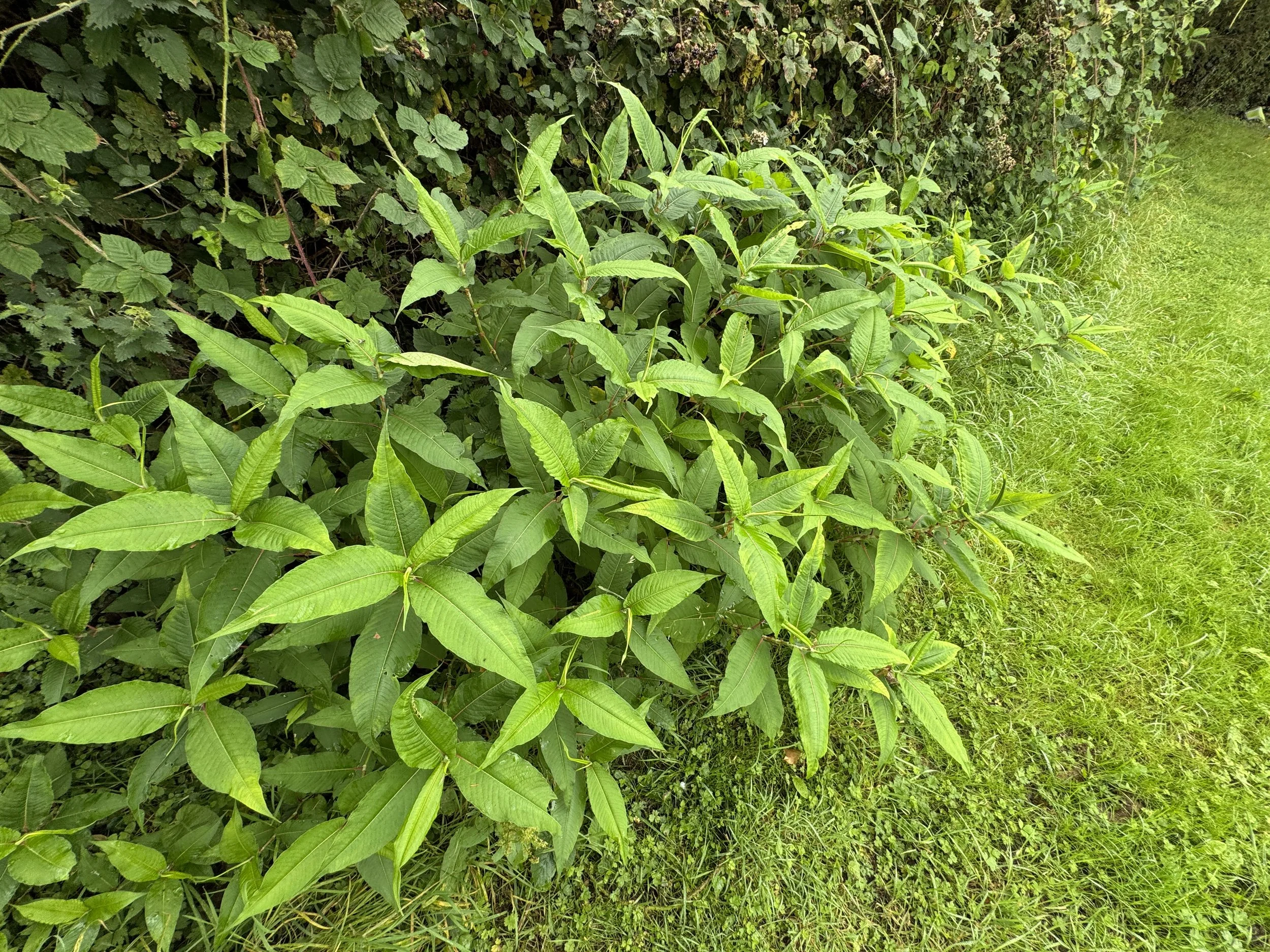
Himalayan Knotweed found in Headford, Co. Galway