The problem with your Septic Tank: The realities of Rural Wastewater Treatment in Galway & Mayo
Generally speaking, rural houses in Galway and Mayo have either a “Septic Tank & Percolation Area” or a “Proprietary Treatment System”. Nothing is more infuriating when surveying a property and having difficulty finding even the basic parts of a septic system! From missing AJ’s, defective percolation areas and damaged tanks, we have seen it all!
From our surveys of rural houses, about 90% of the septic systems do not meet the minimum standards required. The problem is so widespread, that we often have to advise purchasers not to let it be a sticking point when buying a house, as it is likely going to be the same problem in the next house!
Ground conditions don’t make it easy for wastewater percolation. Between the heavy clay soils in parts of Mayo that struggle with drainage, and the shallow limestone bedrock across much of County Galway, getting a standard percolation area to work properly can be a serious challenge.
Because of these unique landscapes, local authorities and the EPA keep a very close eye on private systems (and that is why all systems require registration if you are selling your property). A malfunctioning septic tank isn't just an inconvenience; it can quickly leads to water ponding in the garden or, worse, polluting local wells and waterways. If your system was put in decades ago, under different SR6 rules or even before regulation, the chances are the tank no longer meets modern environmental standards. It may also only have a ‘soakpit’ and not a formal ‘percolation area’, which can be another significant problem.
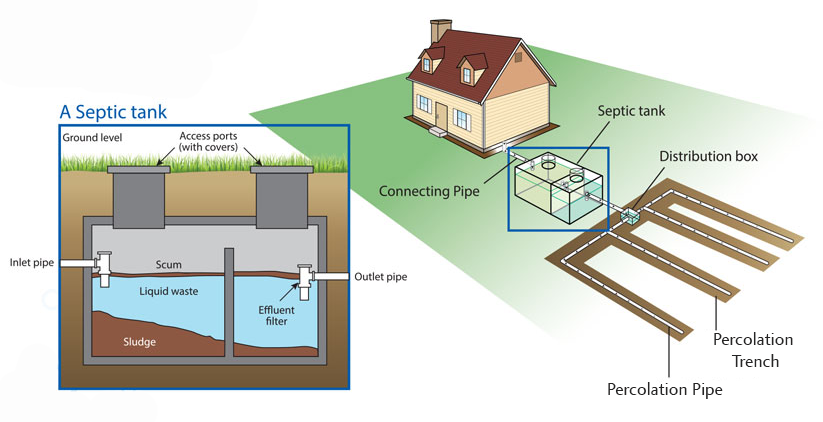
A typical configuration for a rural septic tank system in Galway / Mayo
Here are the common problems we find with septic systems when inspecting property in Galway/Mayo:
Not enough AJ’s: So, the sewer waste magically appears at the septic tank, we don’t know how it got there! No access junctions, no chambers and loads of hidden pipe bends! This is the first place the trouble will start.
AJ’s and inspection chambers are necessary at every pipe bend and at regular intervals over long pipe runs for servicing/rodding. Without these, you will have difficulty undertaking basic maintenance to keep the system clear and running.
No distribution box: The wastewater coming out of the septic tank should go to a ‘percolation area’. This should start with a distribution box that segregates the wastewater evenly and sends it to a percolation pipe. If there is no distribution box, the waste is directed to one pipe and this causes ponding in the garden of your property. This ponding leads to an over concentration of effluent that could wash to local streams that will kill fish and damage downstream ecology in our rivers and lakes.
A distribution box is necessary to evenly distribute wastewater to separate percolation pipes.
System is misconfigured: It is not appropriate to divert untreated kitchen waste to a separate soakpit, but we see this a lot. It is not appropriate to pipe a percolation area/soakpit to a drain/stream, this will cause pollution.
SR6 Regulations since 1991 state that septic tanks treat all domestic sewage in a single system. Only clean rain or surface water is diverted to on-site soak pits or local drains.
Where is the percolation area?: Percolation areas are the final filter for wastewater, before it enters the ground and meets the groundwater. It is necessary to clean the wastewater and prevent pollution. At some properties, there is no evidence of a percolation area, or it is buried deeply without any access for servicing.
Percolation areas are fundamental filtration devices necessary to help the breakdown of liquid waste before it enters the water table. The percolation pipes should be accessible with a distribution box at the stary and have percolation vents at each end. It is also advisable to install a Grease Trap onto the kitchen sink waste to prevent grease from hardening in the percolation area and blocking the system.
Noisy Plant: Modern treatment plants have mechanical devices such as aerators that can make a noise when in operation. These devices are necessary for the tank to function and must remain turned on and serviced at all times.
Treatment plants are reliant on devices such as aerators and pumps. If these are noisy, it may mean that there is a problem. Never ignore warning lights, this will lead to long-term system damage and ultimately may require replacement.
When we inspect a property, we look for visual evidence of failures. Odours are also common with septic tanks, but a persistent pungent odour will indicate stagnant waste and potential failure. Odour in the garden, away from the tank, suggests that the percolation area is blocked. We also lift all accessible access chambers around the house to check for blockages.
Advice to the Purchaser: Consider providing a grease trap in the system. Make sure the system is registered. Remember, 90% of systems we inspect are failing in some way, so it is not just your property!
Advice to the Vendor: Register your septic tank. Flush the manholes and de-sludge the system. Make sure there are enough access chambers. Have the private treatment unit serviced. Make sure the percolation area is clearly visible and accessible. Renew defective plant.

Essential Maintenance Tips for Galway / Mayo Homeowners
Given our unpredictable weather and often challenging ground conditions, looking after a septic tank in Galway or Mayo requires a bit of proactive care. A few simple habits can be the difference between a smoothly running system and a multi-thousand-euro excavation job in your back garden.
1. Watch What Goes Down the Sink
Your septic tank relies entirely on a delicate balance of natural bacteria to break down the solid waste that enters it. If you use harsh, heavy chemical cleaners, thick bleaches, or antibacterial products down the drains, you essentially kill off those helpful bacteria. Stick to septic-safe, biodegradable cleaning products where possible. Equally important: never let fats, oils, or grease from cooking go down the kitchen sink, as they solidify and create a waterproof crust that completely blocks up the pipes and the percolation trenches.
2. Space Out Your Laundry Days
With the amount of rain we get in Mayo and Galway, our soil is frequently saturated. If you run three or four loads of laundry in a row on a Saturday, you are forcing hundreds of litres of water through the tank in a very short window. This massive surge of water causes "hydraulic overloading"—it agitates the tank, forces unsettled solids directly out into the percolation area, and can easily waterlog your lawn. Try to space out your washing machine and dishwasher use across the week to give the ground a chance to drain naturally.
3. Keep the Percolation Area Clear
The grass area over your percolation pipes needs to stay completely open and porous so the soil can naturally filter the treated liquid. Never park cars, drive heavy machinery, or build sheds over this area, as compacting the soil will crush the underlying pipes and completely ruin the drainage. Keep deep-rooting trees and shrubs well away from the tank and soakaway too, as their roots will aggressively seek out the water and completely choke up the system.
4. Keep Your Receipts for De-sludging
You should have your tank emptied (de-sludged) by a fully permitted contractor every one to two years, depending on the size of your household. Don't just do it cash-in-hand; make sure the contractor provides you with an official receipt or waste transfer note. If Galway or Mayo County Council ever knocks on your door for a random EPA inspection, showing them a clear paper trail of regular maintenance is the absolute best way to prove you're a responsible homeowner taking care of your system.
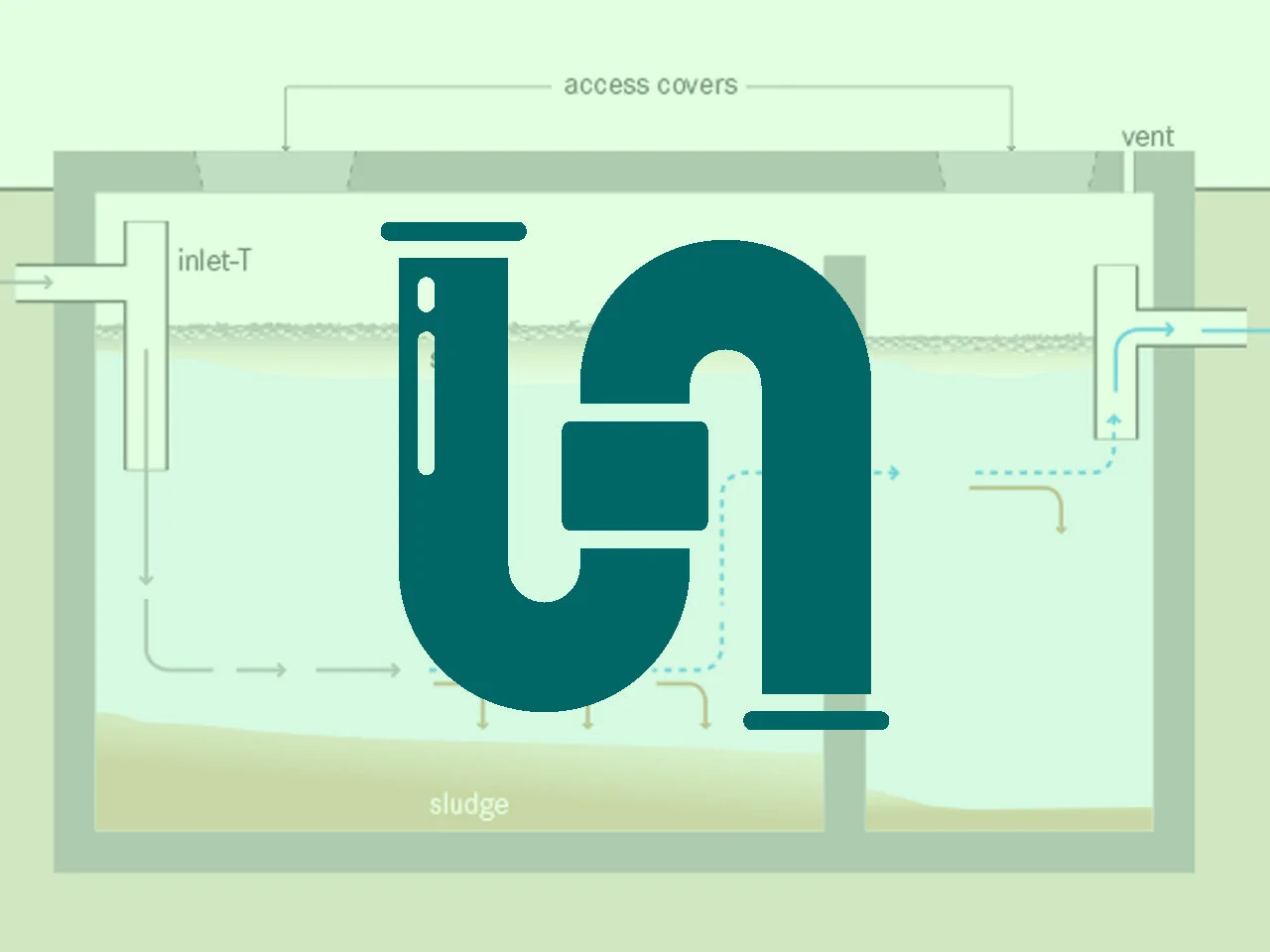
Keep your septic system in order and undertake basic maintenance every year!
Buying a Rural Home in Galway or Mayo? What to Check Before You Sign
If you are currently house-hunting in the West of Ireland, there is a very high chance the properties you are looking at rely on a septic tank. Falling in love with a charming rural cottage or a beautiful detached house in the countryside is easy—but inheriting a failing, illegal wastewater system can turn into a financial nightmare before you even unpack your boxes.
Replacing a completely failed system with a modern mechanical treatment unit and a brand-new percolation area can easily cost between €10,000 to €20,000 depending on the ground conditions.
The Grant Trap for House Buyers
A common misconception among buyers is: "If the tank is old or broken, I'll just buy the house and apply for that new €12,000 government grant to fix it."
Do not fall for this. As a new buyer, you cannot simply apply for the grant to upgrade an old system. To get that funding, the system must have already failed an official, random council inspection, or be located in a highly specific EPA catchment zone. If you buy a house with a non-compliant tank outside of those conditions, the entire cost of the replacement will come straight out of your own pocket.
Your Buyer’s Checklist Before Going Sale Agreed
To protect your bank balance, make sure your Solicitor requests the following information from the seller before contracts are signed:
Proof of “Protect Our Water” Registration: By law, all domestic wastewater systems must be registered with the local authority. Ask to see the registration certificate.
The Maintenance History: Ask for receipts showing when the tank was last emptied and serviced. If they haven’t de-sludged it in ten years, it’s a major red flag for the health of the percolation area.
An Independent Septic Inspection: After your main survey of the property, it would be prudent to hire a specialised contractor to perform a full inspection of the septic system if there were issues noted a the initial stages. They will look at the structural integrity of the tank, check for blockages, and ensure the system works well.
Decoding the €12,000 Septic Tank Upgrade Grant: Can You Actually Get It?
You’ve likely heard about the government septic tank grant increasing to a maximum of €12,000, covering up to 85% of eligible repair or replacement costs. It sounds like a fantastic deal, but there is a major catch that catches local homeowners off guard: you cannot simply apply for this grant because you want to fix an old tank.
To qualify for the funding through Galway or Mayo County Council, your property must fall into one of three very specific brackets:
The National Inspection Plan: Your system must be randomly selected and subsequently fail an official inspection by a council officer, who will then issue you an "Advisory Notice."
High-Status Objective Catchment Areas: Your house must be located in a specific, environmentally sensitive water zone mapped out by the EPA.
Priority Areas for Action: You are situated in a designated catchment area and have received an official eligibility letter directly from LAWPRO (Local Authority Waters Programme).
Crucially, you cannot invite an inspector to your home just to get the paperwork for the grant—doing so actually disqualifies you. The very first step is checking your Eircode against the official EPA catchment maps or waiting for the council to contact you.
What Happens During a Council Inspection?
If you get a letter in the post stating that Galway or Mayo County Council is coming to inspect your domestic wastewater system, there's no need to panic, but you do need to be prepared. The inspector isn’t just looking to see if the tank is full; they are checking the structural integrity and environmental impact of the entire system.
During the visit, they will typically look for:
System blockages or flooding: Signs of ponding water or lush, unusually bright green grass around the tank and percolation area.
Structural defects: Cracks in concrete walls, collapsed pipes, or a tank that allows groundwater to leak in (or wastewater to leak out unfiltered).
Maintenance history: Evidence that the tank is regularly de-sludged by a permitted contractor.
Proximity issues: Whether the system is too close to your own drinking water well or a neighbor’s boundary.
If your system fails, you will receive an Advisory Notice detailing exactly what needs to be fixed. While fixing a failed system is an unexpected headache, that notice is also your golden ticket to unlocking the 85% upgrade grant to help offset the excavation and installation costs