The Problem Upstairs: Planning Issues with Unauthorised Attic Conversions in Ireland.
Extending your home by converting the attic can be a great way to get extra space in your home. It is probably the most cost effective way to extend, instead of building a bricks and mortar extension, as it is claimed to be half the price! However, converting your attic in Galway & Mayo can have regulatory difficulties in terms of planning permission and building regulation compliance. If you don’t deal with these matters, then it can cause serious difficulties when you come to sell your property, or to get insurance for it. So, it is important that you comply with all of the relevant regulations and standards, in order to sell your property. We will explore some aspects of this in this blog post.
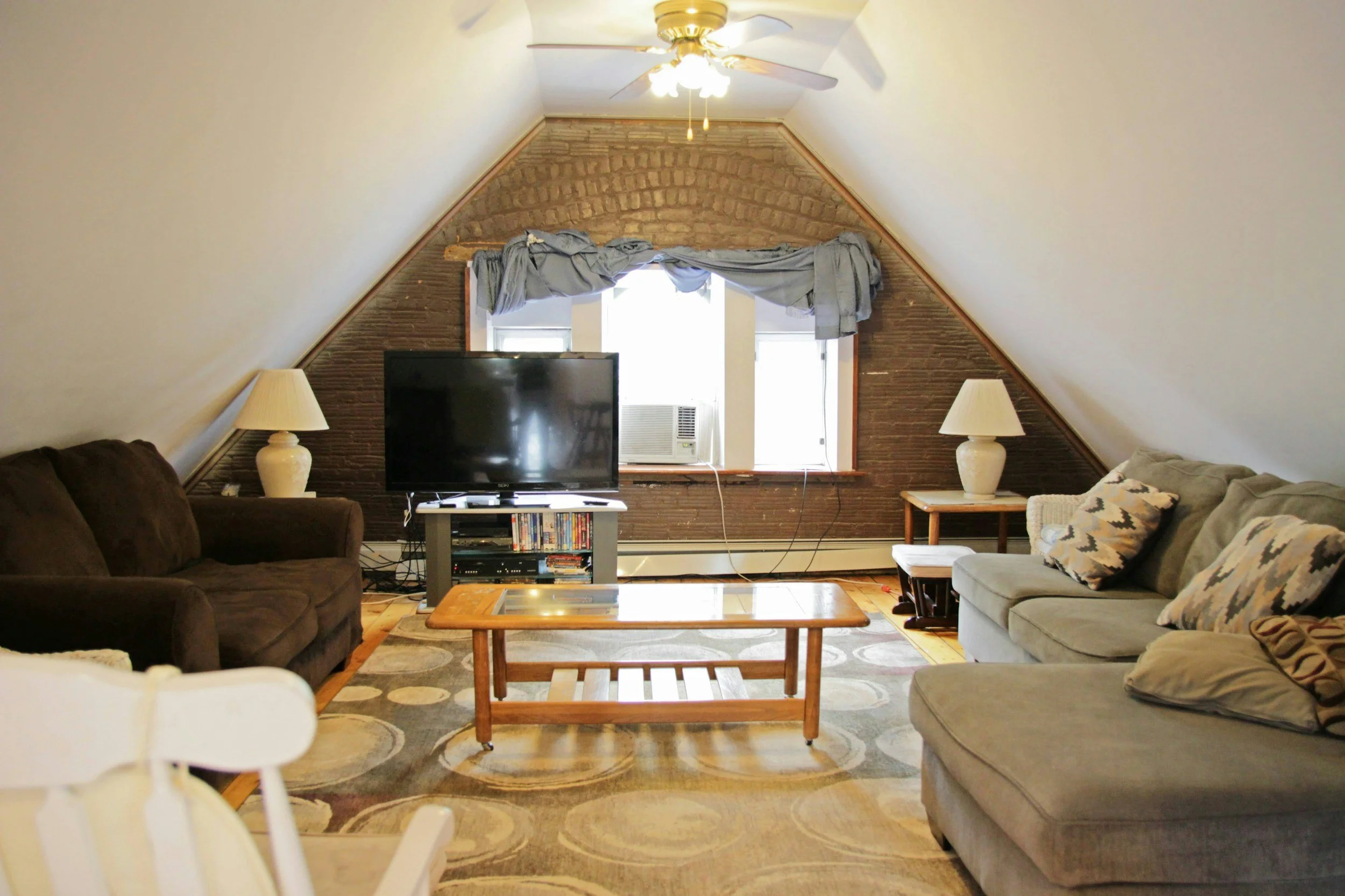
Converting your attic requires planning and building regulation compliance!
Before 2026, it was generally required that if you are converting your attic for habitable use, that planning permission was required. The important thing here to understand is what the definition of “habitable use” is. Under Irish law, Habitable Use is defined as a room used for living or sleeping purposes, but it does not include a kitchen with a floor area of less than 6.5 square meters.
So, an attic room used for living or sleeping purposes requires planning permission (habitable use), but an attic space that is used as storage space (non-habitable use) does not require planning permission, generally speaking. The one instance where this may not be applicable is if your home has a planning condition attached to a permission that precludes attic development, so permission would be required no matter what. So, it is important to check your planning history first.
What happened after 2026? To be specific, after the 27/7/2026, new planning exemptions were introduced under Part 1, Schedule 2 of the Planning & Development Regulations with regards to attic conversions in Ireland, as follows:
New Planning Exemption Class - 1B that permits, without the need for planning permission: “A dormer roof extension and insertion of a dormer window to the side or rear of the house”. The internal volume of the development either singularly or in combination with other dormer roof extensions shall not exceed 30 cubic metres.
New Planning Exemption Class 1C that permits, without the need for planning permission: “The insertion of roof lights on the existing front roof plane of the dwelling”. There shall be a maximum of two roof lights on the front roof plane and shall not excess 100cm length by 90cm width.
So, if you are selling or buying a home in Galway or Mayo that has an attic conversion, it is important to have the planning status of it verified. The following are the common reasons as to why an attic conversion can cause a sale to fall through:
Attic being used as bedrooms, without the benefit of planning permission. This is unauthorised use and requires planning (unless it meets with the new Class 1B & 1C planning exemptions).
Attic used as habitable space, but it contravenes a planning condition. If the original permission has a condition that precludes attic development or other such extensions without a prior grant of permission, then this use contravenes the condition if there is no permission granted.
Attic used as habitable space that is larger than 30 cubic meters.
You want to convert your attic in accordance with the new planning exemption, but it is larger than 30 cubic meters? Yes, this is an issue and it is a very small allowance under the regulations. If you have a standard 2.4m floor to ceiling height, then the 30 cubic meters translates to c. 12.5sqm floor space. This is not a very large allowance, and in many instances will not be workable. We cannot understand why such an allowance was given to be so small? Surely, the logical allowance would have been to allow the conversion to utilise the full extents available within the attic envelope? However, this is just our opinion at this stage, hopefully this will be revised in a later change to the regulations, as we consider it to be unworkable in it’s present allowance.
What about the Building Regulations and Attic Conversions?
This is another problem area for attic conversions in Galway & Mayo that needs to be considered. Compliance with the Building Regulations needs to be established, in order for a space to be defined as habitable or non-habitable. In particular, a habitable space requires a floor to ceiling height of 2.4m minimum. If this is not provided, then the space cannot be considered as habitable (minor infringements can be regarded as trivial).
Bedrooms also require provisions for fire escape and this is also one of the major factors that can impact an attic conversion. In a two storey house, where the attic is converted, the attic bedroom requires a protected fire escape. This means that all doors surrounding the stairs are to be fire doors (leading to the final exit door), which are doors that have self-closers. Interference with these doors (if provided) can negate fire escape and could cause insurance difficulties. The bedroom also requires a window for escape or rescue.
We see countless attic conversions in our work (and on TikTok videos!) that show many non-compliant attic conversions. In summary, the following is required for a habitable attic conversion:
Provision of 2.4m floor to ceiling height, minimum.
Provision of protected stairs (for two storey + attic conversions).
Provision of compliant bedrooms windows for escape or rescue.
Making sure low-level windows are child safe.
If you are selling your house and have converted the attic, it is advisable that you check the compliance status of the attic first. If it is not compliant, then you should empty the attic and only sell it as non-habitable storage space. Also, compliance is determined in two ways - compliance with planning regulation and also compliance with building regulations. If the attic is not compliant with building regulations, there would be no point in applying for retention permission to retain the attic as a bedroom, as it would still be non-compliant.
So, remember! Compliance with both Planning Regulations and Building Regulations is requires in order to have a habitable attic conversion!